Hey there, Yogis!
Do you know what the Yamas and Niyamas are?
Yamas and Niyamas are the first two limbs of the Yoga Sutras, used as ethical guidelines in yogic philosophy.
Yamas is a Sanskrit word meaning restraints and includes principles such as non-violence, truthfulness, non-stealing, moderation, and non-possessiveness. These principles guide how we interact with others.
Niyamas, meaning observances, include purity, contentment, self-discipline, self-study, and surrender. These principles guide how we relate to ourselves.
Today, we want to reflect on the first Yama: Ahimsa, or non-violence.
Why is Ahimsa important?
Because practicing non-violence allows us to move away from harming ourselves and others, guiding us toward kindness and compassion — both inward and outward.
Our ability to be non-violent toward others is directly connected to our ability to be gentle with ourselves.
How we treat ourselves is ultimately reflected in how we treat those around us.
As yoga teacher Jun Lee beautifully explains:
"It’s like a can of paint — the color inside the can determines the color of whatever we paint. The color of how we treat ourselves becomes the color of how we treat others."
When we live in balance, we naturally live in non-violence.
Are you living in balance?
How are you treating those around you?
How are you treating yourself?
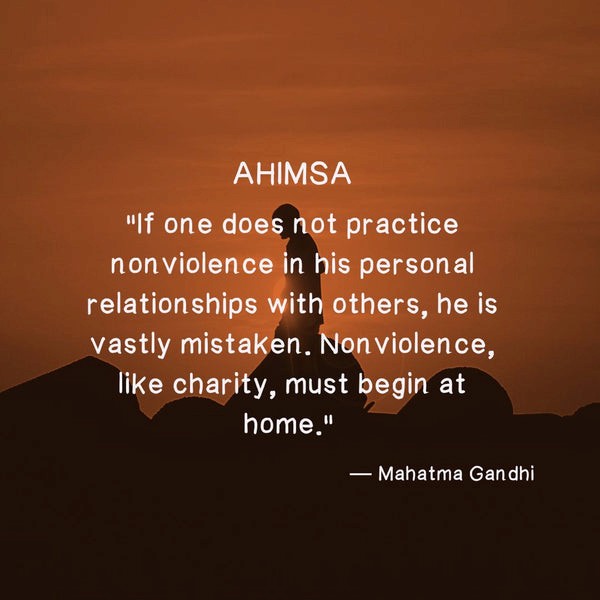
I. A quote by Mahatma Gandhi
"If one does not practice nonviolence in his personal relationships with others, he is greatly mistaken. Non-violence, like charity, must begin at home.”
II. Ecstatic Dance
Ecstatic dance is a form of movement that emphasizes self-expression, exploration, and personal transformation.
It invites us to move in ways that feel authentic and natural, without rigid choreography or fear of judgment.
This practice can benefit both ourselves and our connection with others in many ways:
Self-liberation
Ecstatic dance creates space to release social expectations and limiting beliefs. Through free movement, we can reconnect with our authentic selves and experience a sense of freedom.
Emotional release
Movement helps release accumulated emotions and energy, supporting emotional well-being and offering a healthy channel for expression.
Physical well-being
Dancing increases circulation and stimulates endorphins, contributing to improved vitality and overall physical health.
Stress reduction
Ecstatic dance can function as an active meditation, helping shift attention away from daily worries and into the present moment.
Connection and empathy
Often practiced in community spaces, ecstatic dance creates a shared experience that encourages empathy, compassion, and a sense of unity.
Inspiring others
Our willingness to move freely can encourage others to do the same. Authentic expression often creates a ripple effect, inviting more openness and confidence in those around us.
Try this Rhythmic Yoga (and Ecstatic Dance!) playlist to inspire presence.
III. 13th | Documentary
13th is a 2016 American documentary directed by Ava DuVernay.
The film explores the history and lasting impact of racism and systemic inequality within the United States criminal justice system.
It examines the 13th Amendment to the U.S. Constitution, which abolished slavery and involuntary servitude, except as punishment for a crime.
The documentary investigates how this exception has contributed to the continuation of racial inequality, revealing complex social, political, and historical dynamics.
Featuring interviews with scholars, activists, politicians, and formerly incarcerated individuals, 13th uses archival footage and powerful storytelling to engage viewers both emotionally and intellectually.
The film encourages meaningful conversations, empathy, and reflection on potential pathways toward justice and social transformation.
Watch the official trailer.
That is all for today.
Thank you for reading, and please feel free to share your thoughts with us. We truly enjoy hearing from you.
Xoxo
Treelance Yoga